By AZREInsider
The national housing market is cooling fast — and the so‑called “2026 Housing Reset” may not deliver the rebound many analysts are promising. Prices are slipping, affordability is still crushed, and Phoenix — one of America’s most closely watched markets — is already flashing early signals the rest of the country can’t ignore.
This isn’t doom. This isn’t a crash. This is a reality check.
And Phoenix might be the first market showing us what the next chapter really looks like.
📉 National Prices Turn Negative — The First Drop in Over Two Years
CNBC just confirmed what buyers have been feeling for months:
“Home prices have finally come down compared with last year… down 1.4% in just the last three months.” — CNBC
Inventory is rising nationwide — active listings up 13% year‑over‑year — but new listings remain scarce. Sellers are still holding back, and buyers are still squeezed by high rates.
Some Sun Belt markets are taking bigger hits. CNBC notes:
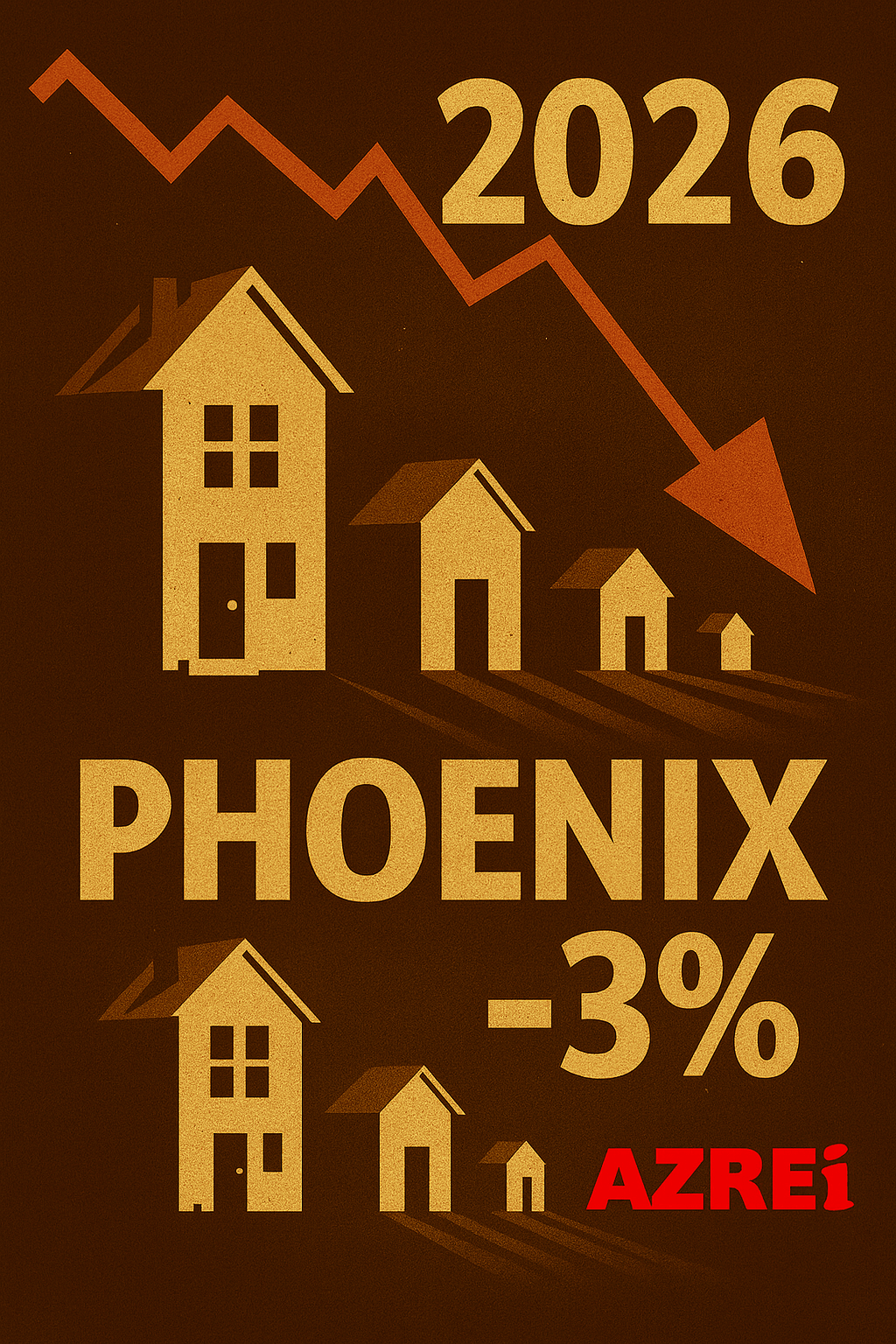
“Atlanta and Phoenix saw price decreases of 3%.” — CNBC
That –3% in Phoenix isn’t a collapse. It’s a signal — the first sign that the “reset” may be less of a rebound and more of a long, flat plateau.
💰 Even With Declines, the National Median Home Price Is Still $415,200
AOL Finance puts the national affordability crisis into perspective:
“The median existing home sold for $415,200 in October.”
That’s the real story: Prices are softening, but they’re still historically high. Rates are easing, but they’re still historically high. Inventory is rising, but it’s still historically low.
This is why the 2026 reset may not feel like a reset at all.
🔮 Redfin’s 2026 Forecast: A Reset… or a Fizzle?
Redfin is calling the next phase:
“The Great Housing Reset.” — Redfin
Their 2026 predictions:
✅ Home prices rise about 1%
A rounding error — not a recovery.
✅ Mortgage rates average around 6.3%
Better than 2025, but still too high to unlock massive demand.
✅ Home sales rise about 3%
A small bump, not a surge.
✅ Wages finally outpace home prices
A positive shift — but slow.
Redfin’s forecast is optimistic. Phoenix’s early numbers suggest something more muted.
🔥 Phoenix: The First Warning Shot — or the First Stabilizer?
Phoenix is down –3% year‑over‑year, but context matters:
- Phoenix surged harder than almost any major U.S. market
- Investors poured in during the pandemic
- Prices overheated, then cooled
- Now the market is stabilizing — not collapsing
Phoenix is the bellwether for the Sun Belt. When Phoenix moves, the rest of the region follows.
Here’s what Phoenix is showing us:
✅ Demand is soft, but not dead
Buyers are waiting for rates to drop — not walking away.
✅ Inventory is rising, but still manageable
No flood. No panic. Just normalization.
✅ Prices are dipping, not crashing
A –3% decline after a 40%+ pandemic surge is a correction, not a crisis.
✅ Migration is still strong
People are still coming — just at a more sustainable pace.
Phoenix is stabilizing. The question is whether the rest of the country will follow — or fall harder.
🧩 Is the 2026 Reset a Dud? Phoenix Might Be Telling Us Yes
Let’s connect the dots:
- National prices are falling
- Phoenix is already down –3%
- The national median is still $415,200
- Rates are easing slowly
- Inventory is rising
- Buyers are cautious
- Sellers are stubborn
- Builders are offering incentives
- Investors are selective
This doesn’t look like a “reset.” It looks like a stall.
A long, slow, grinding plateau where:
- Prices move sideways
- Rates drift down slowly
- Affordability improves inch by inch
- Buyers and sellers stay in a standoff
- Markets like Phoenix stabilize early
- Other markets lag behind
If Phoenix is the early indicator — and it usually is — the 2026 reset may be far quieter than the headlines suggest.
🏁 Final Word: Phoenix Isn’t Crashing — It’s Calling the Bluff
The national narrative says 2026 will be the year of the “Great Housing Reset.”
Phoenix says: Maybe not.
Phoenix’s –3% decline isn’t a warning of collapse. It’s a warning of stagnation. A sign that the reset may be less dramatic, less exciting, and less transformative than predicted.
And that’s exactly why Phoenix matters. It’s the first market to normalize. The first to stabilize. The first to show what the next era of U.S. housing might actually look like.
Not a boom. Not a bust. Just a long, steady reset that feels more like a dud.
Sources: CNBC | Redfin | Yahoo Finance






















Leave a Reply