
Well, it’s happened. After what felt like years of sellers calling all the shots, the tables have finally turned. According to the latest data from Redfin, the U.S. housing market now has nearly 500,000 more homes for sale than there are buyers. That’s not just a shift—it’s a full-on flip!
“There are about 1.9 million people selling homes right now, compared with 1.5 million looking to buy. That 34% gap is the biggest since Redfin began tracking the data in 2013.”
Translation: Buyers, you finally have the upper hand. 🎉
What Does This Mean for Buyers?
- More choices: You’re no longer stuck fighting over the same 3 homes.
- Room to negotiate: Price drops? Seller concessions? Closing cost help? You’ve got leverage now.
- Time to think: No more “write an offer in 30 seconds or lose the house” stress.
What’s Causing This?
It’s a mix of things:
- Mortgage rates are still in the 6%–7% range, which has kept some buyers on the sidelines.
- But sellers—especially those with life changes—are listing anyway.
- Add in economic uncertainty and some stubbornly high prices, and you get a gap between buyers and sellers.
The Top 10 Buyer’s Markets Right Now
Redfin also broke down the top U.S. cities where buyers have the most leverage. Here are the places where the gap between sellers and buyers is the widest:
| Metro Area | % More Sellers Than Buyers | Median Home Price | Price Change (Y/Y) |
|---|---|---|---|
| Miami, FL | 197.7% | $574,696 | +5.6% |
| West Palm Beach, FL | 182.0% | $513,683 | +2.7% |
| Fort Lauderdale, FL | 179.3% | $451,709 | +1.2% |
| Austin, TX | 124.1% | $433,990 | -3.0% |
| Jacksonville, FL | 119.5% | $368,311 | -3.4% |
| Tampa, FL | 118.6% | $371,028 | -1.3% |
| Phoenix, AZ | 100.6% | $452,290 | -2.1% |
| Las Vegas, NV | 92.1% | $448,605 | +2.4% |
| Orlando, FL | 92.0% | $407,411 | +0.8% |
| Nashville, TN | 90.0% | $467,178 | 0.0% |
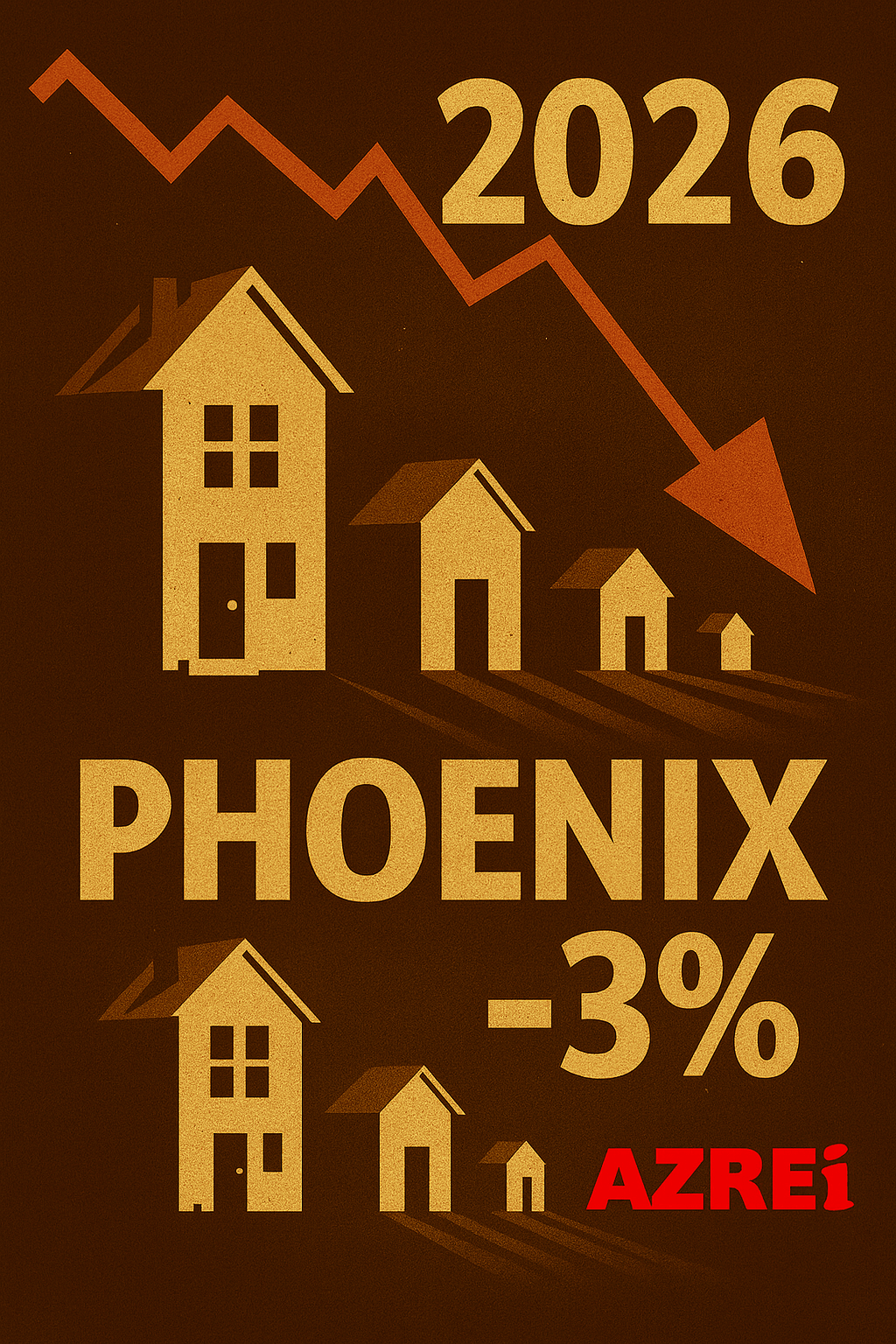
Phoenix buyers—take note. We’ve got double the number of sellers compared to buyers, and prices are actually down over 2% year-over-year. That’s rare air in our market, and it won’t last forever.
Real Talk
If you’ve been waiting for your moment, this is it. Sellers are getting more realistic. Homes are sitting longer. Some markets are seeing serious price cuts. It’s not a total fire sale, but it’s the most buyer-friendly market we’ve seen in years.
Let’s talk strategy. Whether you’re buying your first place or upgrading your space, it’s time to take advantage.
Now, according to Redfin, all of this is likely to come together more fully toward the end of the year—but that doesn’t mean you should wait around. If you’re thinking about making a move or landing your next investment, now’s the time to start the process. At the very least, begin exploring the market, running the numbers, and seeing what’s out there. The early bird gets the best deal.
Here’s Exactly How I’d Play This as a Buyer Today
Now let me tell you exactly how I’d approach this market if I were a buyer right now:
- Step 1: Start looking. Even if you’re not ready to pull the trigger today, get out there. Walk homes, scroll listings, and get familiar with pricing, neighborhoods, and what’s sitting vs. what’s moving.
- Step 2: Talk to the other side. Speaking with the listing agent—and if possible, the seller—is crucial. I’ve been doing this long enough to know that the real story often comes from subtle things: certain words they use, changes in tone, body language. You can tell when someone’s motivated, frustrated, or bluffing.
- Step 3: Love the home? Run the comps. And I mean conservatively. I’d evaluate the property based on the lowest side of market value—or even below market—and structure my offer accordingly.
- Step 4: Ask for contingencies. In this market, you’ve got negotiating power. Inspection, appraisal, maybe even closing cost help—this is your window to ask.
- Step 5: Expect rejection—but plant the seed. A seller might say no at first, but I believe most are bluffing and will circle back. The key is to make an official written offer. Don’t just go verbal. A written offer shows you’re serious and gets their attention. That’s when the real conversation begins.
Bonus move: I want the rejection. Why? Because if they accept my first offer, I don’t care what anyone says—they probably would’ve taken less. And if they do accept it? You better believe I’m coming back during the inspection period asking for more off the price or throwing in added contingencies. That’s where the real deal-making happens.













 AriZona Real Estate insider!
Leave a comment