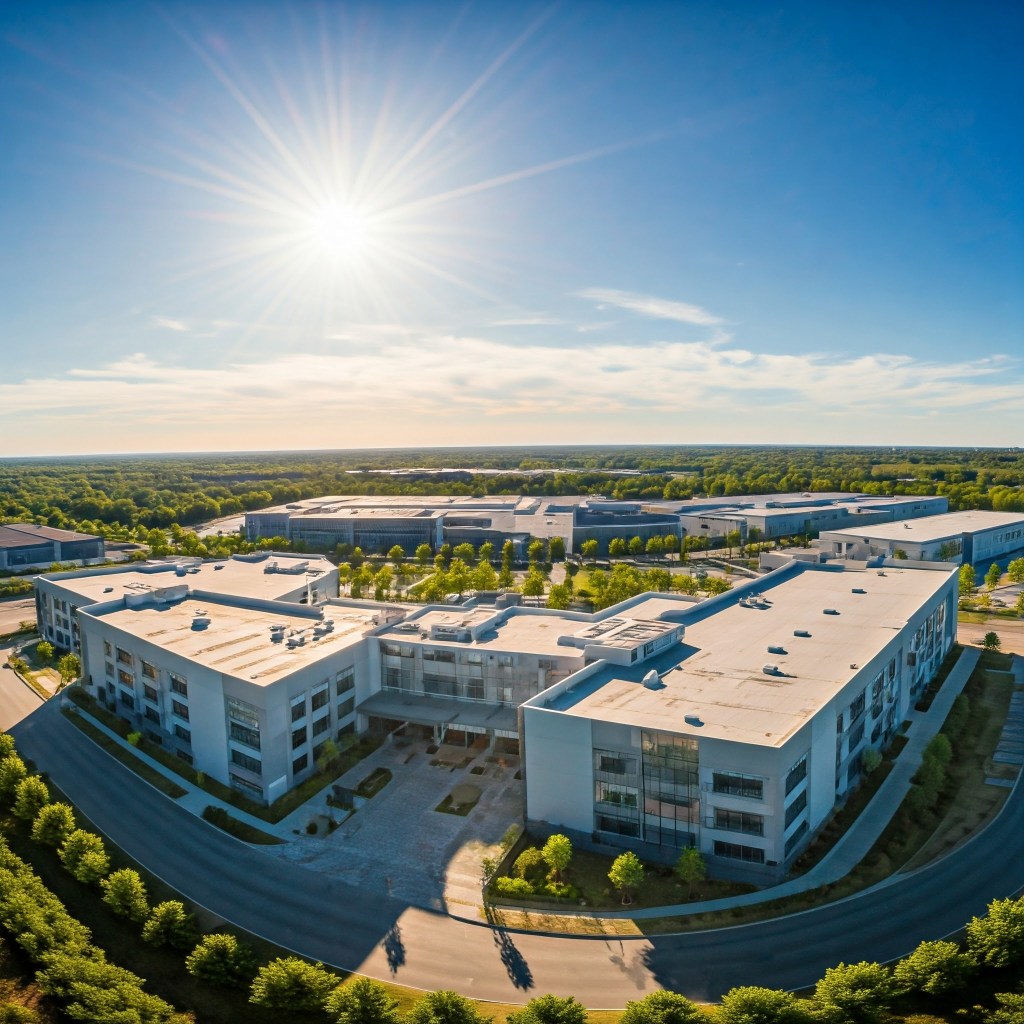
As we move into 2025, the commercial real estate (CRE) sector faces both significant challenges and exciting opportunities. Despite headwinds, such as the ongoing struggles in the office sector and an evolving economic climate, experts believe the CRE market is poised for new growth and transformation. Here are some key trends to watch for in 2025:
1. Stabilizing Office Market
After a turbulent period, the office market is expected to find stability in 2025. According to CBRE, a slowdown in construction combined with shifting occupier sentiment toward expansion could result in a 5% increase in office leasing volume. Prime office spaces are anticipated to be in shorter supply, with vacancy rates potentially returning to pre-Covid levels by 2027.
2. Rising Industrial and Tech Niches
With the demand for warehouses surging, other types of industrial properties are also gaining attention. AI-driven data centers, cold storage facilities, EV battery plants, and quantum computing campuses are expected to attract significant investment. These properties offer far-reaching economic benefits, making them appealing to elected officials and community groups.
3. Enhanced Workplace Experience
As more employers mandate a return to the office, a focus on creating appealing workplaces is becoming essential. Ariel Sumry, an interior project designer at Perkins Will’s Dallas studio, emphasizes the importance of custom spaces that nurture community and foster collaboration. Amplifying the emotional and psychological benefits of in-person work will be key.
4. Increasing Retail Rents
A lack of new retail construction has driven the national availability rate under 5%, which is expected to spark rent hikes in 2025. Retailers will likely seek to lock in longer-term leases in prime locations to capitalize on favorable terms.
5. Evolving Life Sciences Facilities
Advancements in life sciences, particularly in AI and anti-obesity drugs, will drive companies to re-evaluate their portfolio strategies. Expect to see more flexible and technologically advanced lab facilities to accommodate these emerging trends.
6. Demand for Border-Accessible Industrial Buildings
Changes in trade policy will likely increase demand for industrial buildings near the U.S.-Mexico border. CBRE predicts heightened interest in distribution facilities along the I-29 and I-35 corridors, impacting markets like San Antonio, Austin, Dallas-Fort Worth, and Kansas City.
7. Acoustic Solutions in Workplaces
With the return to office, noise control has become a significant concern. Doug West from TPG Architecture highlights the need for “sophisticated sound management,” incorporating sound-proofing finishes, higher panels, and phone booths to create functional office spaces.
8. More “We” Space in Offices
As companies encourage employees to return to the office, there’s a shift from “me” space to “we” space. Collective work hubs, conversation pits, and conference tables are being strategically placed to foster spontaneous team huddles and casual client meetings.
How These Trends Impact Phoenix, Arizona
Phoenix, Arizona, with its rapidly growing economy and expanding metropolitan area, is uniquely positioned to be affected by these commercial real estate trends. Here’s how:
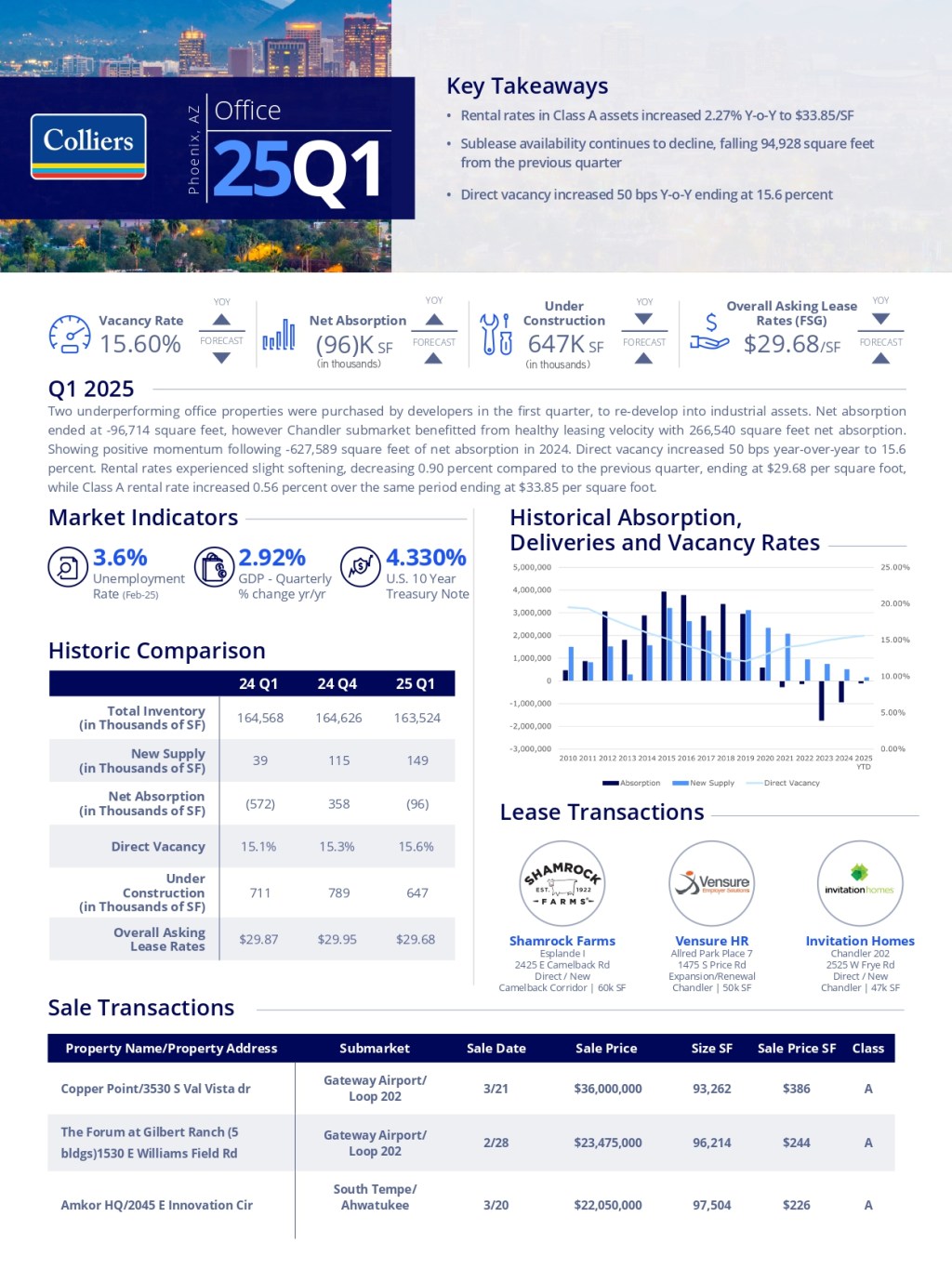
- Stabilizing Office Market: Phoenix’s office market is likely to benefit from the predicted stability, with new leases and expansions potentially boosting the local economy. Businesses looking for prime office spaces will find Phoenix an attractive option due to its favorable business climate.
- Rising Industrial Niches: The demand for industrial properties in Phoenix is set to rise, especially with the city’s strategic location and existing infrastructure. Data centers, cold storage, and EV battery plants are particularly relevant, given Phoenix’s growth in the tech and logistics sectors.
- Enhanced Workplace Experience: As Phoenix companies mandate a return to the office, there will be an emphasis on creating appealing and functional workplaces. Expect to see more custom-designed office spaces that enhance employee well-being and collaboration.
- Increasing Retail Rents: With limited new retail construction in recent years, Phoenix retailers may experience rent hikes. However, this also presents an opportunity for long-term leases in prime locations to secure favorable terms.
- Evolving Life Sciences Facilities: Phoenix’s burgeoning biotech and healthcare industries will benefit from advancements in flexible, tech-savvy lab spaces, driving further growth and innovation in the sector.
- Demand for Border-Accessible Industrial Buildings: Phoenix’s proximity to key north-south trade corridors makes it a prime location for new industrial developments, especially those serving cross-border trade with Mexico.
- Acoustic Solutions in Workplaces: Noise control will become increasingly important in Phoenix offices as more employees return to work. Implementing sophisticated sound management solutions will enhance productivity and employee satisfaction.
- More “We” Space in Offices: Phoenix businesses will likely see a shift towards more collaborative workspaces, fostering innovation and teamwork among employees.
Conclusion
2025 promises to be a transformative year for commercial real estate, with Phoenix well-positioned to capitalize on these emerging trends.
For more detailed insights, you can read the full article by Jeffrey Steele on Forbes here.










 AriZona Real Estate insider!
Leave a comment